AI is the Next Computer: What Today’s Students Need to Know About the Future of Work
Geeta Pherwani · September 15, 2026 · 4 min read
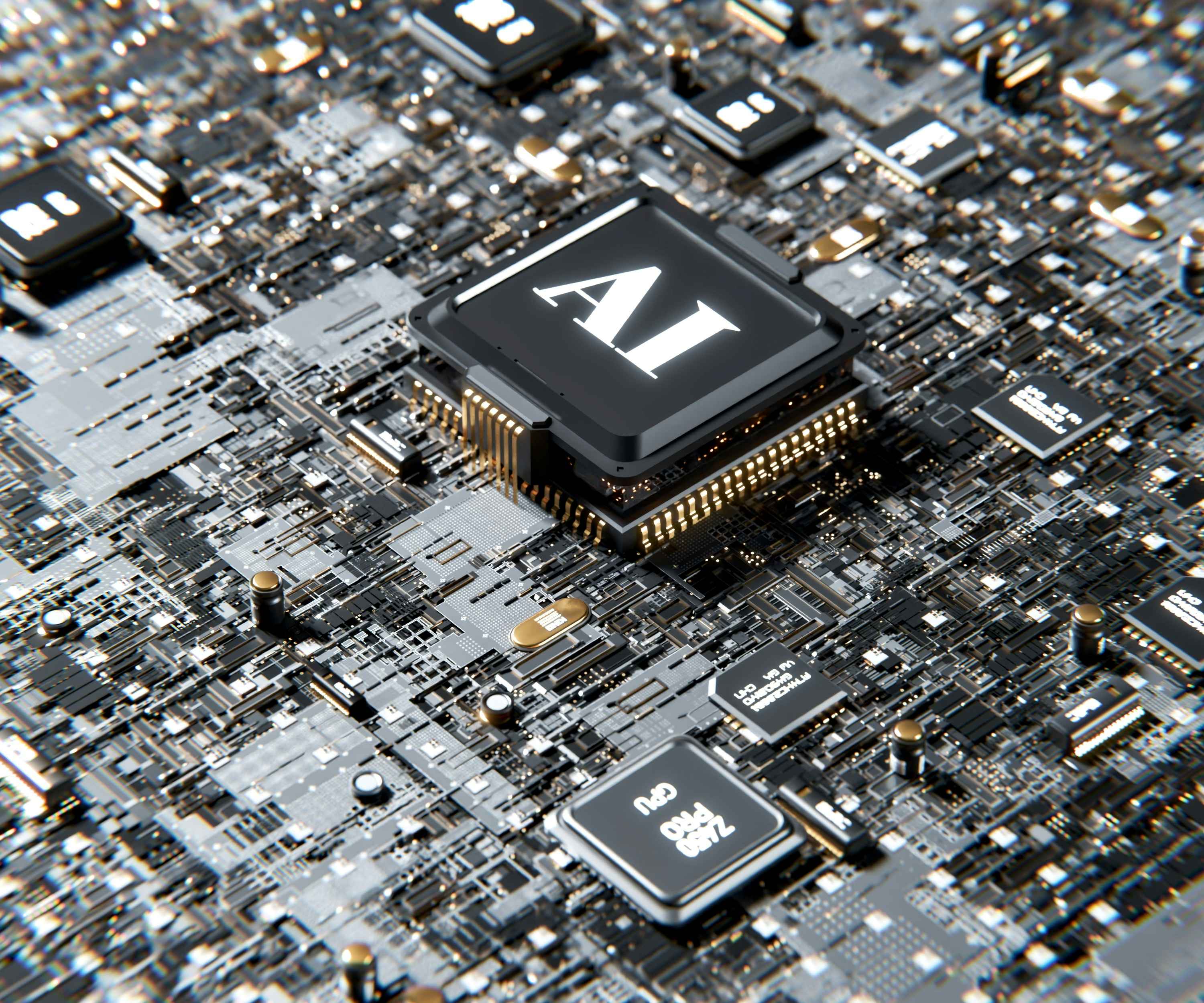
AI Is the Next Computer: What Today’s Students Need to Know About the Future of Work
AI is the next computer.
That may sound like a bold statement, but if we look at how computers changed the world, the comparison starts to make a lot of sense.
Before AI, There Were Computers
In 1946, ENIAC was unveiled as one of the first general-purpose electronic computers. It occupied an enormous room, weighed around 30 tons, and was primarily a tool for governments, universities, and research institutions. Five years later, in 1951, UNIVAC I became one of the first commercially produced computers in the United States.
At the time, it would have been difficult to imagine where this technology would eventually lead.
Computers did not become transformative because everyone became a computer scientist. They became transformative because, over time, every profession learned how to use them.
The development of the microprocessor in 1971 made computers dramatically smaller and more affordable. The introduction of the IBM PC in 1981 helped bring personal computing into businesses and homes. Then, during the 1990s, the internet transformed computers from standalone machines into connected tools that changed how we communicate, learn, work, shop, and do business.
Today, it is hard to think of a profession that has not been influenced by computing. Engineers design and model with computers. Doctors use them to analyze information and support research. Accountants rely on software for calculations and financial reporting. Architects design digitally, scientists work with enormous datasets, and marketers use technology to understand customers and measure campaigns.
Computers did not eliminate these professions. They changed what it meant to work in them.
Now consider AI.
The field of artificial intelligence emerged in the 1950s. The term “artificial intelligence” appeared in John McCarthy and his colleagues’ 1955 proposal for the Dartmouth Summer Research Project on Artificial Intelligence. The workshop itself took place in 1956 and is widely regarded as the birth of AI as a formal field of research.
So, AI itself is not new. What is new is how quickly it is becoming accessible and useful to everyone.
For decades, AI was largely the domain of researchers and specialized organizations. Today, AI can help people write, analyze information, conduct research, create content, write code, identify patterns, automate repetitive work, and work through enormous amounts of information.
And that is where the comparison with computers becomes particularly interesting.
AI Won’t Just Create New Jobs. It Will Change Existing Ones.
The biggest impact of AI may not be the creation of a handful of entirely new “AI jobs.” Instead, it may be that AI becomes part of almost every existing job, just as computers eventually became part of almost every profession.
An engineer may use AI to explore thousands of design possibilities in the time it once took to evaluate a handful. A doctor could spend less time sorting through information and more time focused on patients and complex clinical decisions. A lawyer might review and organize documents in hours instead of days, freeing up time for strategy and advocacy. A financial professional can analyze enormous amounts of data much faster, while a marketer can quickly test ideas, understand customer behavior, and refine campaigns.
The point is not that AI will do these professions for us. The people who understand engineering, medicine, law, finance, marketing, education, and countless other fields will still be essential. What changes is how much they can accomplish.
What Does This Mean for Students?
And this is where the conversation becomes especially important for today’s high school and college students.
When we think about preparing students for the future, it is tempting to ask, “What AI skills should they learn?” But perhaps that isn’t the best first question.
A better question might be:
“What will make a person valuable when AI is available to everyone?
Think about what happened with computers. Knowing how to use a computer eventually stopped being a specialized advantage and became a basic expectation in many workplaces. The advantage shifted from simply having access to the technology to knowing how to use it effectively to do better work.
AI may follow the same trajectory.
The students entering the workforce five or ten years from now may not be competing against AI. They may be competing against other people who know how to use AI effectively while bringing strong human skills, expertise, and judgment to the table.
Preparing for the Future
For students, that means the goal shouldn’t be to predict exactly what jobs will exist in 2035. It should be to understand their interests, explore different career paths, build strong foundations, and develop the skills that will allow them to adapt as those careers evolve.
They will also need to learn how to work with AI rather than simply work around it.
The Bottom Line
The computer changed the workplace.
AI may change it again.
And preparing for that future starts long before the first job application.
It starts with the choices students make today.
Sources & Further Reading
· Computer History Museum - ENIAC
· Intel - The First Programmable Microprocessor
· IBM - The IBM Personal Computer
· Dartmouth - Where AI Was Born
· AI Magazine — Original 1955 Proposal for the Dartmouth AI Project